
Leopard Gecko Care Guide
Everything you need to know about enclosure setup, heating, UVB lighting, hides, insect feeding, supplements and keeping your leopard gecko healthy.
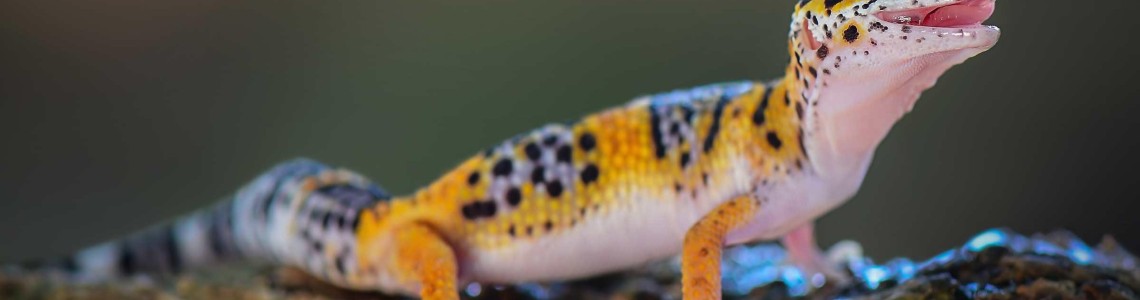
Eublepharis maculariusThe leopard gecko (Eublepharis macularius) is a mainly crepuscular and nocturnal lizard originating from dry, rocky regions of South and Central Asia. Its distinctive markings, movable eyelids and thick tail make it easy to recognise. Although leopard geckos are popular pets, their long-term wellbeing depends on appropriate temperatures, a secure environment and a varied insect-based diet.
A spacious and secure enclosure
Leopard geckos spend most of their time on the ground, exploring, digging and climbing over low, stable structures. An enclosure measuring approximately 90 × 45 × 45 cm is a useful starting point for one adult, although additional floor space is beneficial.
Essential equipment
- A warm side and a cool side
- At least three suitable hiding places
- A dedicated humid hide
- Stable rocks and cork structures
- Safe, diggable substrate
- A drinking dish and optional feeding dish
Individual housing
Leopard geckos are best housed individually. Keeping them together may cause stress, competition for food, bites or other injuries, even when both animals are female.
Create several sheltered areas throughout the enclosure. Explore our reptile hides, terrarium substrates and reptile water dishes.
Heating and temperature zones
A leopard gecko needs a temperature gradient so it can move between warm and cool areas. A suitable overhead reptile heat lamp, controlled by an appropriate thermostat, is often a good choice. Make sure the animal cannot touch the heating element.
| Area | Practical guideline |
|---|---|
| Warm surface | 32–35°C |
| Warm ambient area | 28–31°C |
| Cool side | 23–26°C |
| Night | Often 18–22°C |
Use an infrared thermometer for surfaces and digital thermometers for air temperatures. Always check conditions at the actual locations your gecko uses.
UVB lighting and the day-night cycle
Although leopard geckos are mainly active at dusk and during the night, they can benefit from carefully controlled, low-level UVB exposure. UVB supports vitamin D3 production and calcium metabolism.
A suitable T5 UVB tube with an appropriate T5 fixture and reflector can be used when the lamp strength and distance are properly selected.
A UVI of approximately 0.5–1.5 in an accessible illuminated area may serve as conservative guidance. Always provide fully shaded hiding places, and take extra care with light-sensitive morphs.
Maintain a regular day-night cycle and avoid coloured night lights. The enclosure should become dark at night.
Hiding places and natural furnishings
Leopard geckos spend much of the day resting in sheltered locations. An enclosure should provide at least one warm hide, one cool hide and one humid hide.
Warm and cool hides
A warm hide lets the gecko rest in a protected location while warming up. A cool hide allows it to retreat when it needs lower temperatures.
The humid hide
Fill this hide with suitable, slightly damp material. Check it regularly to prevent drying out, contamination and mould growth.
Our reptile hide category includes caves and shelters. Choose products that fit both your gecko and its enclosure.
Choosing the right substrate
A natural substrate can encourage digging and exploration. For healthy adult leopard geckos, a firm, diggable mixture of reptile-safe soil and sand can be appropriate.
Avoid calcium sand, sharp stones, loose gravel, wood chips and reptile carpet that is difficult to clean. Paper towels can be useful temporarily for newly acquired animals or during medical monitoring.
Explore our reptile substrate range and read more about bioactive terrarium substrates.
Feeding: a diet of live insects
Leopard geckos are insectivores. Offer a varied selection of appropriately sized live feeder insects that have been fed a nutritious diet beforehand, a process known as gutloading.
| Life stage | Typical feeding frequency |
|---|---|
| Young geckos | Usually daily or nearly daily |
| Growing juveniles | Gradually less frequently |
| Healthy adults | Often around 2–3 times per week |
Adjust portions according to weight, activity and body condition. Remove uneaten insects and avoid prey that is too large.
Waxworms and other very fatty larvae should be occasional treats rather than staple foods. Fruit purées and vegetables are not a normal diet for this species.
Calcium and vitamins
Appropriate calcium intake is important for healthy bones, muscles and growth. Lightly dust feeder insects according to a suitable schedule with Zoo Med Repti Calcium without D3.
Zoo Med Reptivite
For additional vitamins and minerals, Zoo Med Reptivite can be used. Versions with and without vitamin D3 are available. The appropriate choice depends on UVB exposure, diet and any other supplements being provided.
Calcium powder and multivitamins have different purposes. Develop a balanced supplement routine based on your gecko's age, condition and husbandry.
Drinking water and humidity
Always provide fresh water in a shallow, stable reptile water dish. Choose a bowl that is easy to clean and difficult to tip over.
Replace the water daily and clean the dish regularly. Placing it away from the hottest area can help reduce evaporation.
General enclosure humidity of approximately 30–40% can be a useful starting point, allowing for natural fluctuations. The humid hide should remain noticeably more humid than the rest of the enclosure.
Shedding and the remarkable tail
Leopard geckos shed their skin regularly. Before shedding, the skin often becomes dull or greyish. Geckos commonly eat their shed skin, so you may not see any remains.
After shedding, inspect the toes, tail tip and eye area. Retained skin can cause problems. A properly maintained humid hide supports healthy shedding.
The tail as an energy reserve
The thick tail stores energy reserves. A tail that becomes noticeably thinner may indicate a health problem. Under severe threat, a leopard gecko can drop its tail. The tail usually regrows, although its shape and appearance often change.
Behaviour and gentle handling
Leopard geckos are most active around dusk and at night. Spending much of the day hidden is normal behaviour.
Allow a new gecko time to settle in before handling it. Start with short sessions only after it is feeding reliably and behaving calmly. Support the entire body and hold the animal low over a safe surface.
Avoid sudden movements, squeezing and excessive handling. Wash your hands thoroughly after contact with the gecko or its enclosure.
Health and common problems
A healthy leopard gecko generally has clear eyes, good body condition, a steady gait and a normal appetite.
Warning signs
- Rapid weight loss
- A noticeably thinning tail
- Tremors or weak limbs
- Prolonged refusal to eat
- Retained shedding around toes or eyes
- A swollen abdomen or difficulty passing stool
- Breathing problems
Potential health issues
Important concerns include parasites, metabolic bone disease, dehydration, shedding difficulties, injuries and reproductive problems in females.
Consult a reptile-experienced veterinarian if you notice concerning symptoms.
Buying a leopard gecko and preparing its home
Set up the enclosure before purchasing your gecko. Test the heating, lighting and temperature gradient so everything is working properly before the animal arrives.
Make sure you have suitable hides, heating equipment, UVB lighting, substrate, a water dish, feeder insects and supplements.
Choose a healthy captive-bred animal from a reputable source. Ask about its age, diet, health history and any hereditary concerns associated with particular colour morphs.
Practical care routine
Daily
- Check temperatures and lighting
- Provide fresh drinking water
- Check the humid hide
- Observe behaviour and body condition
- Remove droppings and leftover food
Weekly and periodically
- Review feeding and supplement routines
- Clean hides and furnishings
- Monitor weight and tail condition
- Check UVB equipment
- Arrange faecal testing if health concerns arise
Frequently asked questions
How large should a leopard gecko enclosure be?
Approximately 90 × 45 × 45 cm is a spacious starting point for one adult. Larger enclosures are beneficial when they provide sufficient hiding places and a proper temperature gradient.
Do leopard geckos need UVB?
Leopard geckos can benefit from low-level, carefully controlled UVB exposure. Fully shaded hides must always be available.
What temperature does a leopard gecko need?
A warm surface of approximately 32–35°C and a cooler side around 23–26°C are useful starting points.
What do leopard geckos eat?
They eat suitable live insects, including crickets, locusts, dubia roaches and black soldier fly larvae. Variety and appropriate supplementation are important.
How often should I feed my leopard gecko?
Young animals generally eat daily or almost daily. Healthy adults are often fed two to three times per week, depending on body condition.
Why does a leopard gecko need a humid hide?
A humid hide provides a local moist microclimate that helps support normal shedding.
Can two leopard geckos live together?
Individual housing is usually the safest choice because cohabitation may lead to stress, competition and injuries.
Why is my leopard gecko turning grey or white?
Dull, greyish skin often indicates that the gecko is preparing to shed.
Can a leopard gecko lose its tail?
Yes. Under severe threat, a leopard gecko can drop its tail. It usually regrows, but often with a different appearance.